TIS-100 has a very specific aftertaste: tiny programs, awkward constraints, cycle counts, instruction counts and the feeling that one cleaner idea could halve your solution. If that is what you miss, these are the games most likely to scratch the same itch.
## What makes a game like TIS-100
A game like TIS-100 does not need to copy its grid of nodes exactly. The important ingredients are constrained programming, open-ended solutions and measurable optimization. You should be able to solve a puzzle badly, then return later and make it smaller, faster or stranger.
The best alternatives also preserve the feeling of low-level responsibility. Data does not teleport. Timing matters. Memory is limited. Instructions are few. The game gives you just enough rope to build something elegant or tie your own solution in knots.
## Closest matches to TIS-100
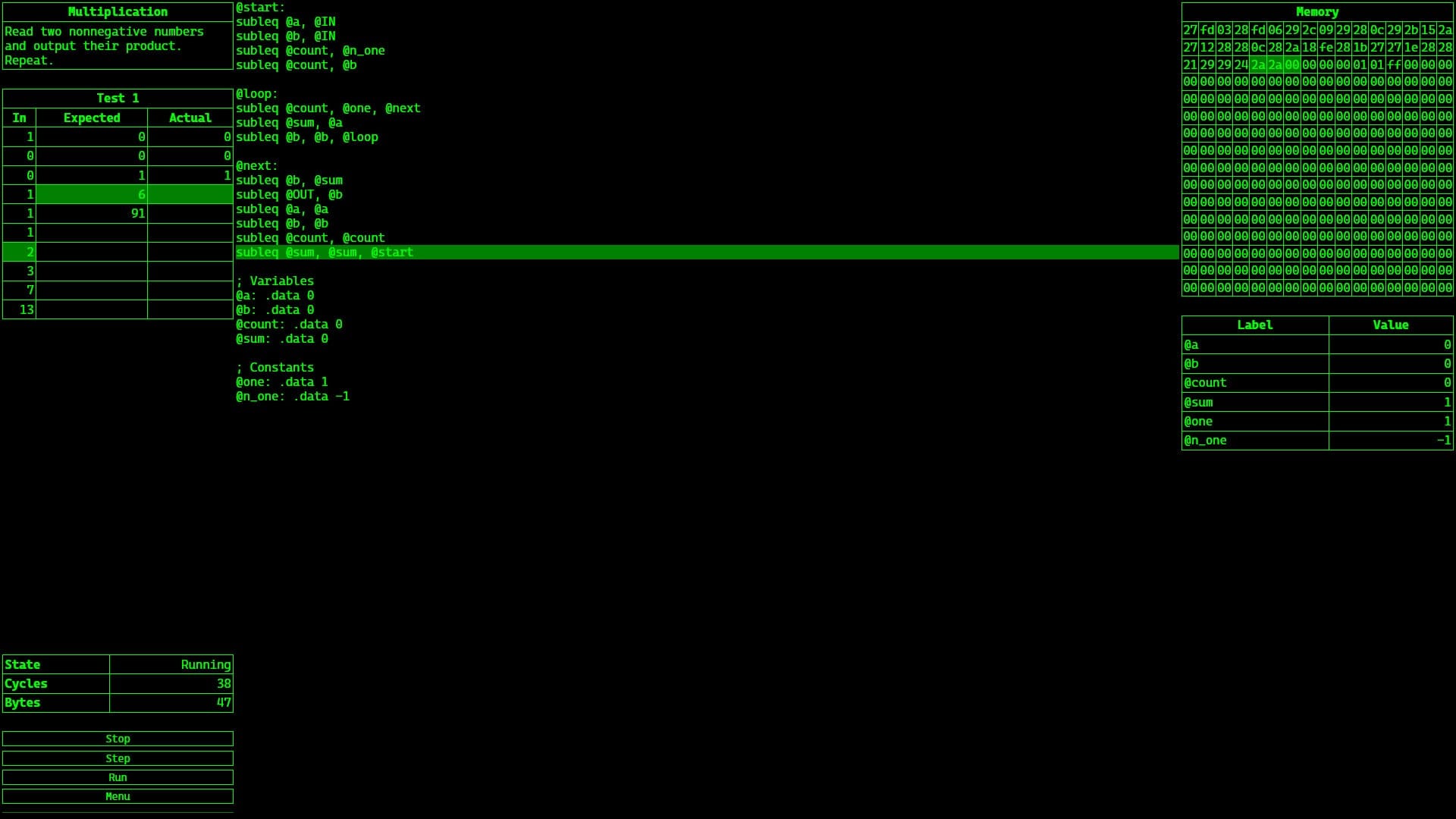
A single-instruction computer where every program is built from nothing but "subtract and branch". Free, brutal, addictive.
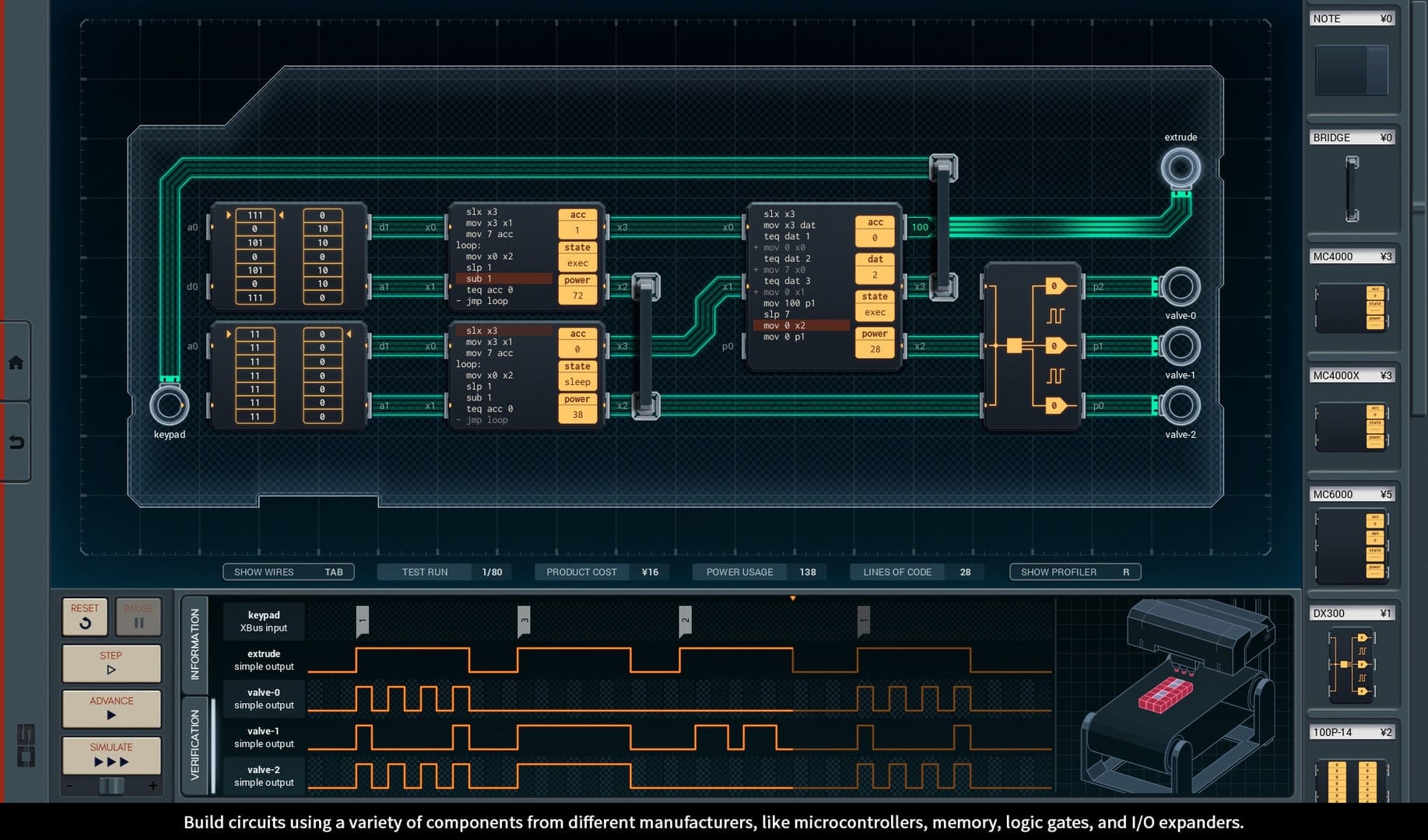
Build circuits and write microcontroller assembly to make gadgets for a shady electronics firm — datasheets, debugging and all.
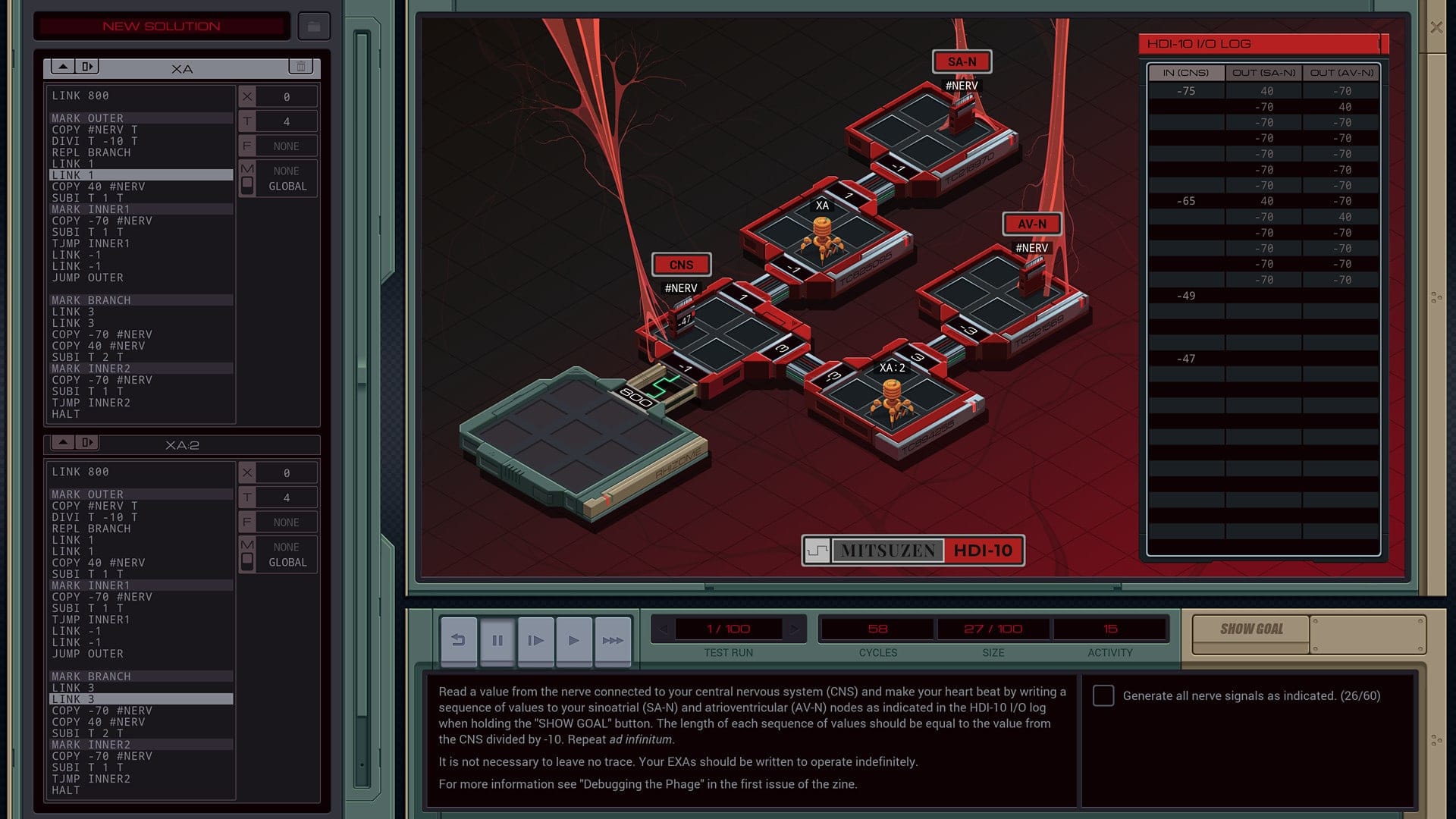
It’s 1997 and you’re a hacker with a disease only an illegal procedure can cure. Write EXA agents to infiltrate machines and steal what you need.
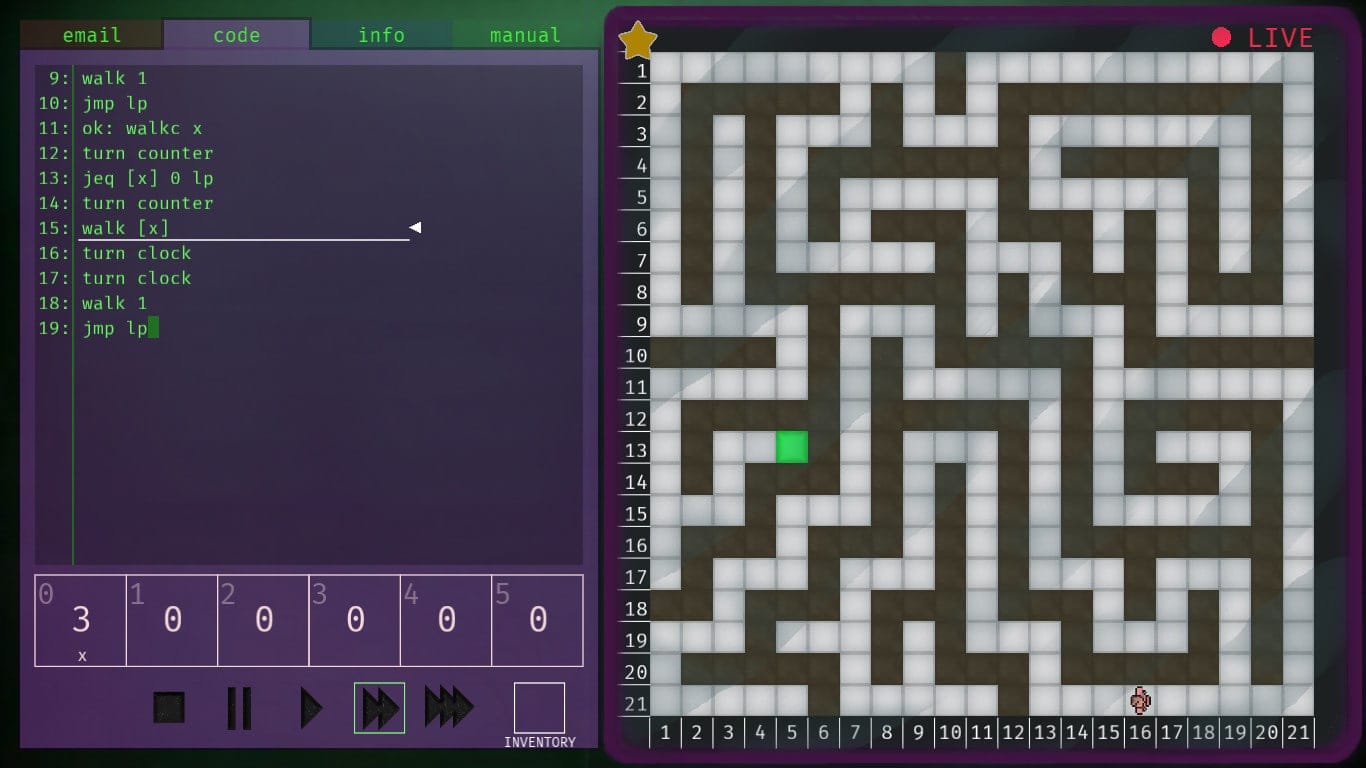
Program corporate robots in a tongue-in-cheek assembly to run a dystopian megacorp’s operations.
SIC-1 is probably the cleanest recommendation if you want the constraint to be even sharper. It builds everything from one instruction, which makes success feel almost suspicious. SHENZHEN I/O keeps the assembly flavor but adds circuit design, component cost and a physical board. EXAPUNKS is faster and more stylish, with tiny agents moving through networks. Marvellous Inc. is a smaller indie option that keeps the programmer-puzzle spirit alive.
## The Zachtronics path after TIS-100
If TIS-100 was your first Zachtronics game, SHENZHEN I/O is the most direct next step. It is still low-level, but the addition of components and wiring makes each solution feel like a product design problem rather than only a program. EXAPUNKS is next if you want more story, more motion and more expressive agent behavior.
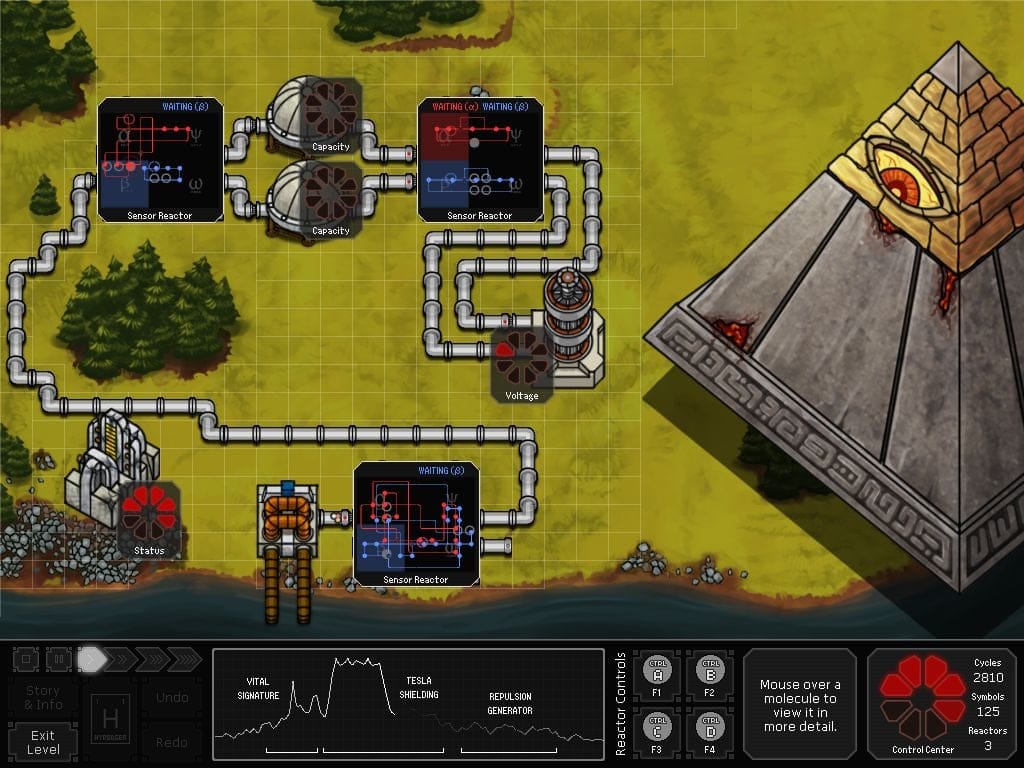
Program pairs of waldos to build molecules on an assembly line. The original Zachtronics visual-programming puzzler.
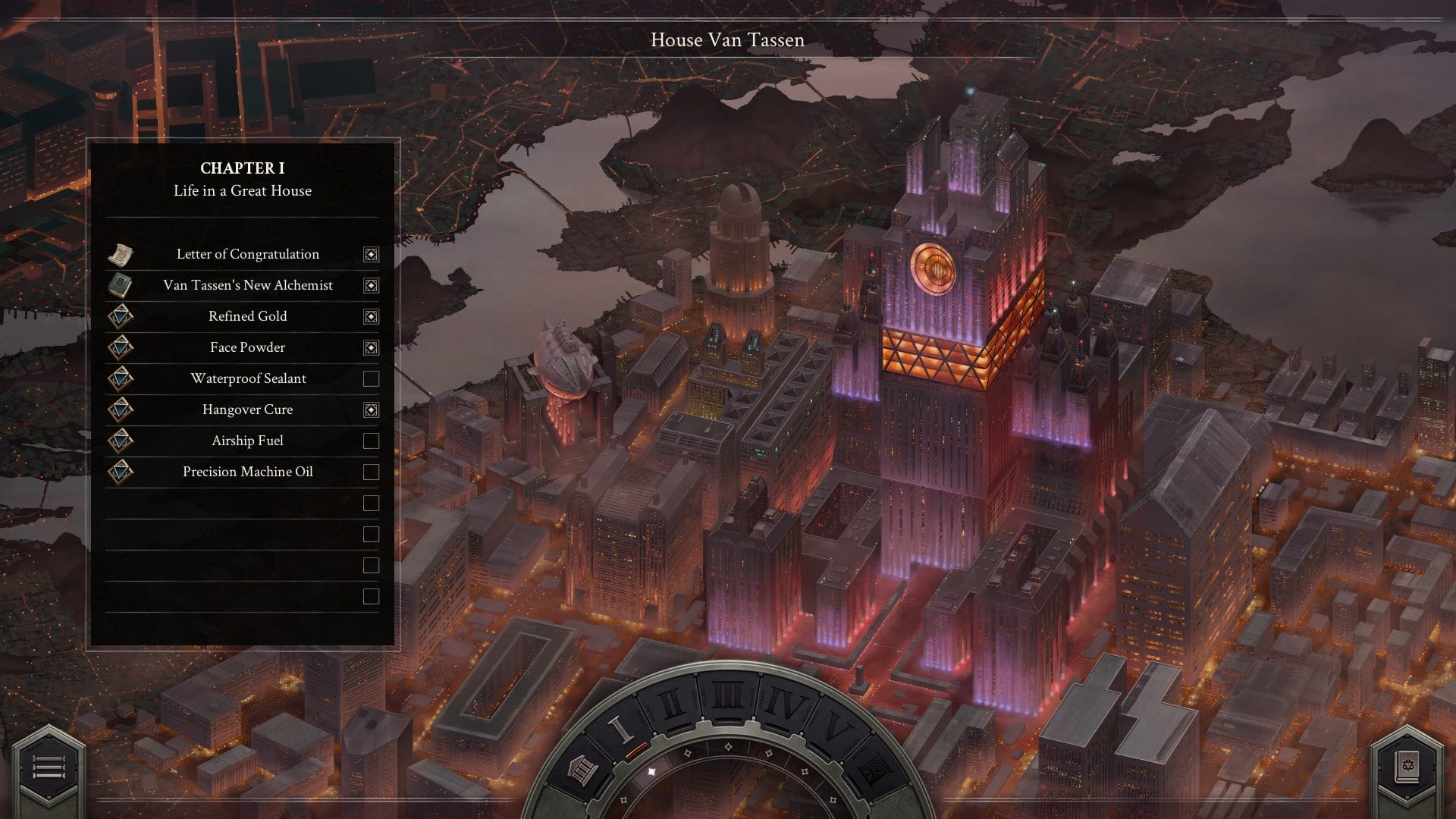
Build and program elegant alchemical machines, then optimise them for cost, cycles and area. The most approachable Zachtronics.
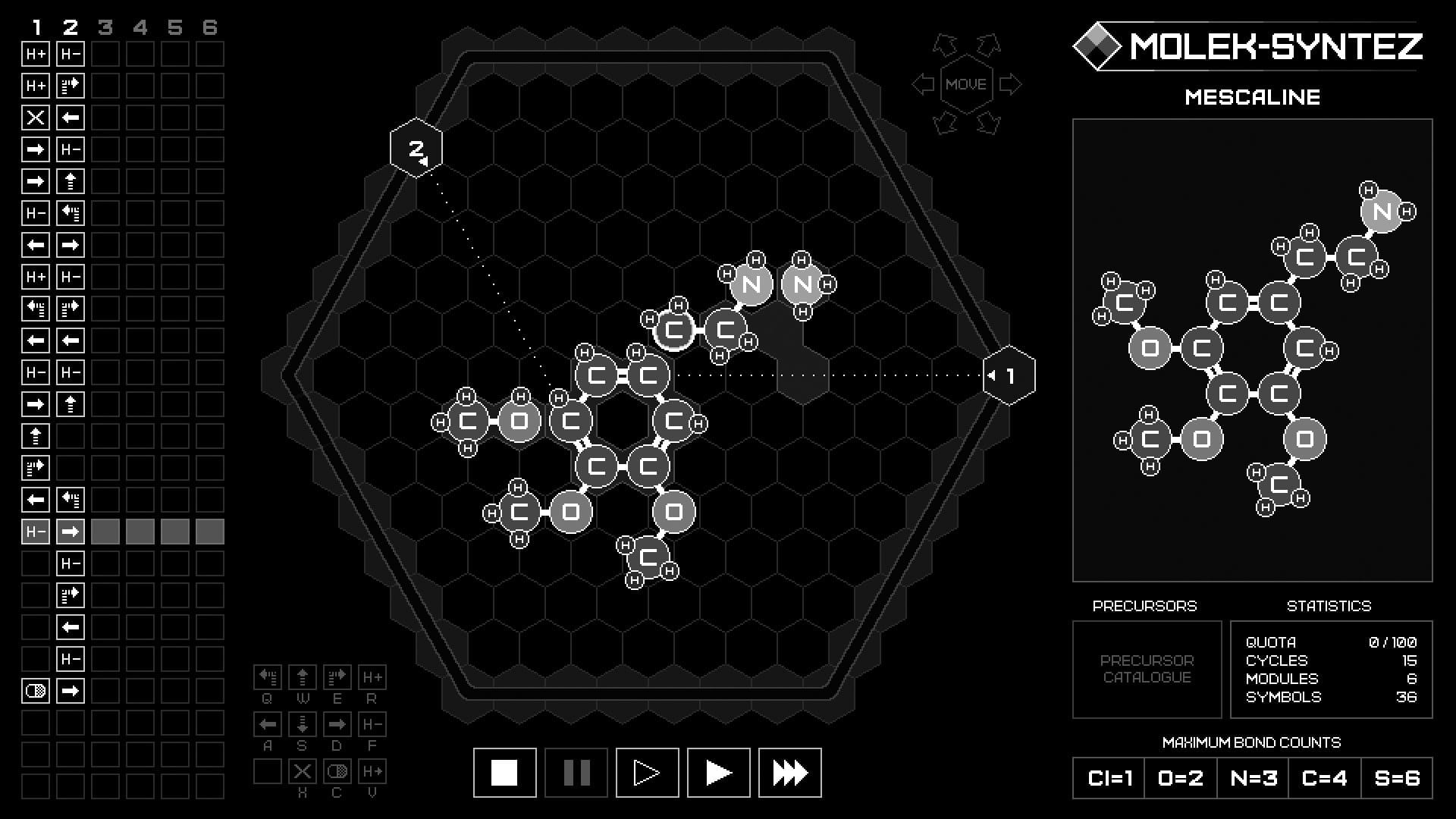
Synthesise molecules on a low-level machine in a bleak Romanian apartment. A lean, cheap successor to SpaceChem.
If you discover that optimization matters more to you than assembly specifically, move sideways into SpaceChem, Opus Magnum and MOLEK-SYNTEZ. They replace text instructions with spatial machines, but the obsession is the same: cycles, area, cost and the suspicion that your solution can be made cleaner.
## Free and smaller alternatives
SIC-1 is the strongest free pick in the same low-level family. Core War is older and more competitive, but it teaches a related pleasure: tiny programs fighting for memory. Box-256 is another compact option if you like fantasy machines and code golf.
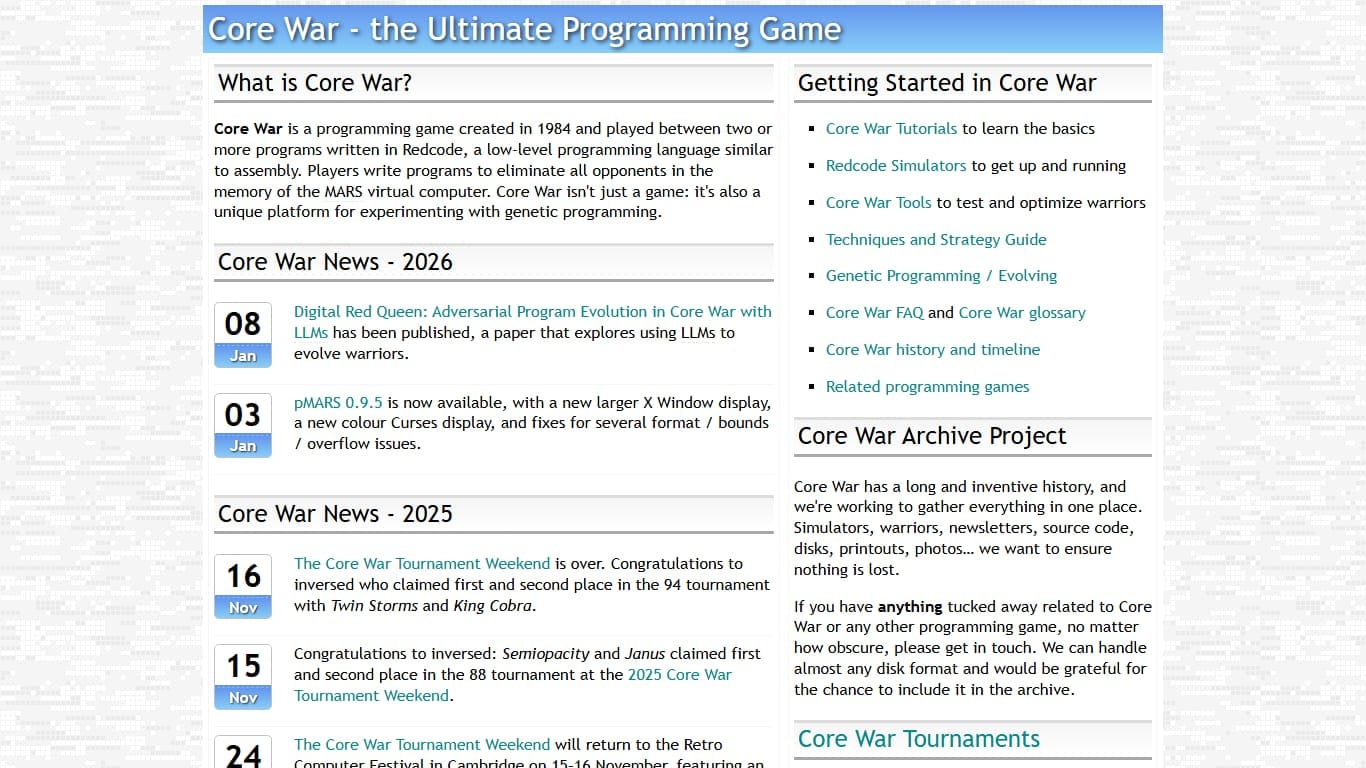
Two programs in Redcode fight for control of a virtual computer’s memory. The 1984 ancestor of every bot-battle game.
Paint pixels by writing assembly for a fantasy 256-byte computer, then golf your programs down to the fewest instructions.
These games are smaller than TIS-100, but that can be an advantage. A small constrained game is perfect for short sessions where you want to focus on one idea and one metric.
## If you want the feeling, not the syntax
Some players finish TIS-100 and realize they do not need more assembly specifically. They want the feeling of building a compact machine, watching it loop and improving it until the wasted motion disappears. If that is you, visual Zachtronics games may be the better next stop than another text-first puzzle.
Opus Magnum is the friendliest version of that feeling because every solution becomes a little performance. SpaceChem is harsher and more timing-heavy. MOLEK-SYNTEZ is smaller, colder and closer to pure mechanism. None of them are assembly games, but all of them reward the same patient search for a cleaner design.
## How to enjoy these games without burning out
The fastest way to ruin a TIS-100-like game is to compare your first correct solution to someone else’s optimized monster. Treat optimization as a second game. First make the program work. Then choose one metric and improve only that. Then, if you still care, look at community solutions and learn a new trick.
It also helps to keep failed attempts. A bad solution often contains one useful idea: a routing pattern, a timing trick, a way to store state without extra memory. Low-level puzzle games reward players who harvest those ideas instead of deleting everything in frustration.
## How to choose your next game
- →Want the closest pure constraint: SIC-1.
- →Want assembly plus hardware flavor: SHENZHEN I/O.
- →Want hacking, story and agent coordination: EXAPUNKS.
- →Want visual optimization instead of text: Opus Magnum or SpaceChem.
- →Want old-school code combat: Core War.
- →Want a tiny browser-friendly challenge: Box-256.
The key is to decide which part of TIS-100 you loved. If it was the instruction set, pick SIC-1 or SHENZHEN I/O. If it was the histograms, pick almost any Zachtronics optimization game. If it was making small programs behave in surprising ways, try EXAPUNKS or Core War.
## Final note
TIS-100 is special because it makes scarcity feel creative. The best games like it do the same. They do not give you more power; they give you fewer excuses. When a solution finally works, it feels earned because every instruction had to justify its place.