RoboWar
Program robots in a stack-based language called RoboTalk and pit them against each other in a top-down arena.
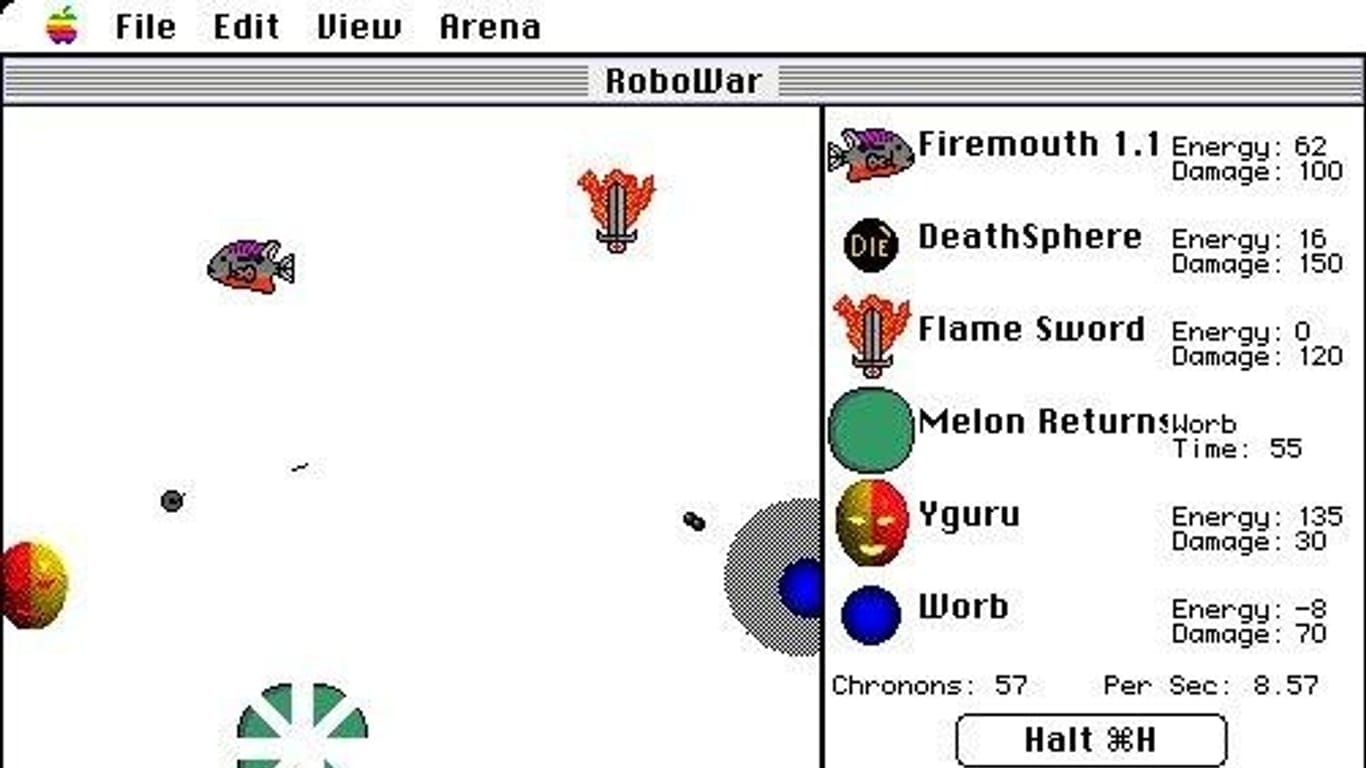
// About this game
RoboWar is best understood as bot arena built around code as the main verb, not as a normal game with a small programming minigame attached. RoboWar began on the Mac in 1989 and lives on as an open-source project. You write each robot’s behaviour in RoboTalk, a quirky stack-based language, then run tournaments where energy management and aiming separate the winners. It has a small but devoted competitive community. The useful question for a new player is not simply "is it about programming?", but what kind of thinking it asks for: RoboTalk, battle, open-source and classic, and a willingness to test an idea by letting the simulation run. Released in 1989 by RoboWar community, it sits in the catalog because the program you write is the thing that actually changes the game state.
The core play is adversarial automation. You submit logic, watch it collide with someone else’s logic, study the replay, then decide whether the weakness was sensing, positioning, targeting, risk management or plain overfitting. Good arena games make every loss useful because the opponent exposes assumptions your tests did not cover. In RoboWar, that means the fun is in the gap between an intention and a working implementation. You start with a rough plan, translate it into the tools the game provides, then watch the result expose every missing condition. A direct solution may pass the first level or match, but the better solutions usually come from noticing a pattern: repeated movement, wasted work, poor targeting, bad routing, a race condition, a blocked path, or a decision that should have been stored as state instead of hard-coded.
The language side is centered on RoboTalk, but the transferable skill is broader than syntax. You practice decomposition, debugging, iteration and the habit of reading the rules before blaming the machine. The advanced rating matters because the game rewards players who can structure larger solutions, reason about edge cases and tolerate several failed iterations before the system behaves. Because it is offline, it works well as a focused engineering toy: you can pause, restart, inspect mistakes and iterate without the pressure of a live server or a disappearing opportunity. The best sessions are usually not the ones where everything works immediately; they are the ones where a failed run gives you a clear hypothesis for the next version. If the game has leaderboards, ratings or community solutions, those become useful mirrors rather than just bragging rights, because they show how many different shapes a correct program can take.
RoboWar is strongest for players who like the feeling of making a system slightly smarter each time they touch it. It will be less satisfying if you want fast reflex challenges, cinematic spectacle or a puzzle with only one intended answer. The reward is more specific: seeing your own instructions harvest, fight, route, query, build, solve or survive without your hand on the controls. It is also easy to recommend as a trial because the entry cost is low: you can open it, test whether the programming model clicks, and only then decide how deep you want to go. Taken on its own terms, it is a practical way to turn programming concepts into a visible loop, where every bug is part of the play and every improvement has a concrete effect on the world in front of you.
// Related games
CROBOTS
★4.2Write a tiny C program to control a battle robot’s motion, scanner and cannon, then watch it fight to the last bot standing.
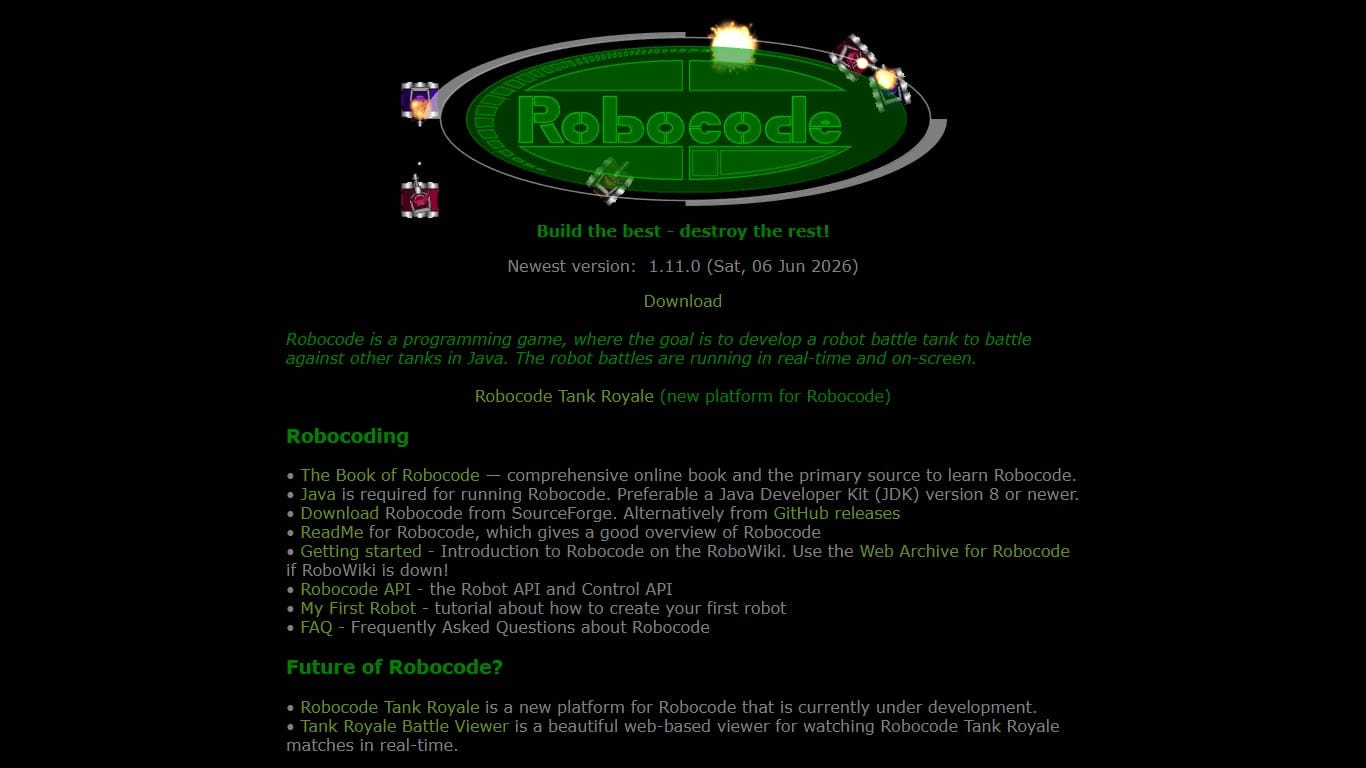
Robocode
★4.5Build a robot tank, code its brain in Java or .NET, and drop it into the arena. The classic that taught a generation to program by battling bots.
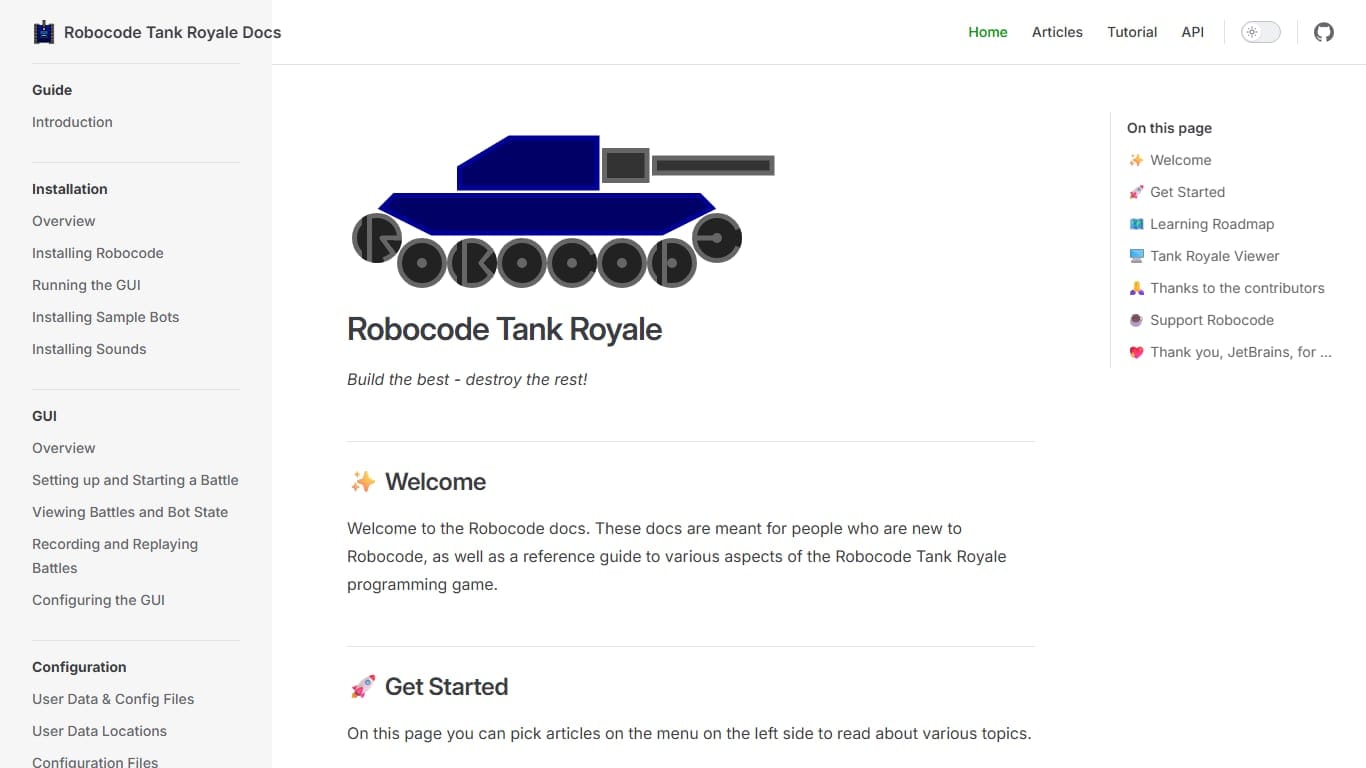
Robocode Tank Royale
★4.4The modern Robocode: bots connect over WebSocket so you can write them in any language you like.
// Related guides
Best JavaScript Coding Games for Automation, Bots and Browser Practice
The best JavaScript coding games for learning automation, bot logic, browser scripting and long-running systems without another dry tutorial.
Coding Games for Classroom Lessons: How to Teach Programming Through Play
A teacher-friendly guide to using coding games in school: lesson structure, age fit, reflection prompts, classroom routines and the best games for each objective.
Geometry Dash in Scratch: A Beginner Guide to Building a Rhythm Platformer
How beginners can build a Geometry Dash-inspired Scratch game: scrolling ground, cube jumping, obstacles, collision, variables and fair level design.